Choosing a new heating and cooling system is an important decision for any property owner. The right HVAC unit can help maintain comfortable indoor temperatures, support better energy efficiency, and provide reliable performance throughout the year. However, with several system types, sizes, and features available, determining which option best fits your property can feel overwhelming.
Your decision should account for your property’s layout, climate, energy needs, and budget. Understanding the differences between available systems can help you make a more informed choice.
Working with experienced HVAC contractors can also make it easier to compare options and identify a system that meets your heating and cooling requirements.
Consider Your Property’s Heating and Cooling Needs
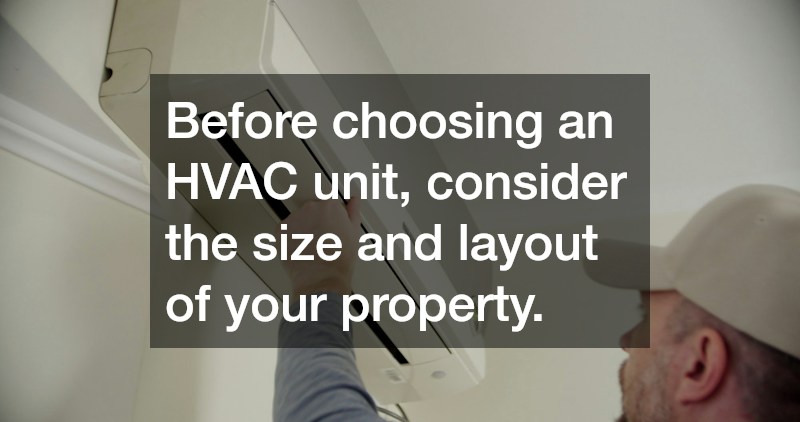
Before choosing an HVAC unit, consider the size and layout of your property. A system that is too small may struggle to maintain comfortable temperatures, while an oversized unit may cycle on and off too frequently. Both situations can affect energy consumption, equipment performance, and indoor comfort.
Insulation, ceiling height, window placement, and the number of occupants can also influence heating and cooling demands. For example, a property with large windows that receive direct sunlight may require different cooling capabilities than a well-shaded property with efficient insulation.
A professional assessment can help determine the appropriate system capacity. HVAC contractors can evaluate these factors and recommend equipment based on your property’s specific requirements rather than relying on square footage alone.
Understand the Different Types of HVAC Units
Several HVAC systems are designed to accommodate different property layouts and heating and cooling preferences. Understanding how each option works can help narrow down your choices.
Central Air Conditioning Systems
Central air conditioning systems use ductwork to distribute cooled air throughout a property. They are commonly found in homes and commercial buildings that already have an established duct system.
One advantage is their ability to provide consistent cooling across multiple rooms. Central systems can also be paired with compatible heating equipment, creating an integrated approach to indoor temperature control.
However, ductwork condition and system compatibility should be evaluated before installation. Leaks or poorly insulated ducts may contribute to energy loss and uneven temperatures.
Heat Pumps
Heat pumps provide both heating and cooling through a single system. During warmer months, they transfer indoor heat outside. When temperatures drop, they reverse the process to move heat indoors.
These systems can be an energy-efficient option because they transfer heat rather than generating it through traditional combustion. Their performance depends on outdoor temperatures, equipment design, and the property’s heating requirements.
Heat pumps may be particularly appealing to property owners interested in having one system handle year-round temperature control.
Ductless Mini-Split Systems
Ductless mini-split systems provide heating and cooling without requiring traditional ductwork. They typically consist of an outdoor unit connected to one or more indoor air handlers.
This design makes them useful for additions, converted garages, older properties without ductwork, and rooms that need independent temperature control. Multi-zone systems can also allow different areas to maintain different temperature settings.
Although ductless systems offer flexibility, the number and placement of indoor units should be carefully considered to achieve effective coverage.
Compare Energy Efficiency Ratings
Energy efficiency is another important factor when selecting an HVAC unit. Different systems have different efficiency ratings, which can help you compare how much energy equipment uses to provide heating or cooling.
For air conditioners and heat pumps, SEER2 measures seasonal cooling efficiency. Heating efficiency may be represented by HSPF2 for heat pumps. Higher ratings generally indicate greater efficiency under standardized testing conditions.
Although high-efficiency equipment may have a higher initial purchase price, it could help reduce energy consumption over time. The actual savings depend on local utility rates, climate, usage patterns, and installation quality.
When comparing equipment, consider both the upfront investment and expected operating expenses. HVAC contractors can explain available efficiency ratings and help you understand which options make sense for your property and budget.
Evaluate Installation and Maintenance Requirements
Even a high-quality HVAC unit may not perform as expected if it is installed incorrectly. Proper sizing, equipment placement, electrical connections, airflow, and system configuration all contribute to reliable operation.
Before choosing a unit, ask about installation requirements and whether existing ductwork or electrical components need attention. Understanding these details can help prevent unexpected expenses during the project.
You should also consider ongoing maintenance. HVAC systems generally require routine attention, including filter replacement, coil inspections, drainage checks, and equipment evaluations. Following the manufacturer’s maintenance recommendations can support system performance and help identify potential problems before they become more significant.
Experienced HVAC contractors can explain the maintenance requirements associated with different systems and help you understand what to expect after installation.
Consider Your Budget and Long-Term Goals
Your budget should include more than the equipment’s purchase price. Installation labor, necessary modifications, permits, accessories, and future maintenance can all contribute to the total investment.
It is also helpful to think about how long you plan to remain in the property. If you expect to stay for many years, investing in an efficient system may provide greater long-term value. If your plans are shorter term, upfront costs and immediate comfort requirements may carry more weight.
Compare multiple equipment options and ask for detailed estimates before making a decision. HVAC contractors can help explain differences in system features, installation costs, and expected operating requirements.
Make an Informed HVAC Investment
Choosing the right HVAC unit involves balancing comfort, efficiency, installation requirements, and long-term costs. Whether you are considering central air conditioning, a heat pump, or a ductless mini-split system, the best option depends on your property’s unique needs.
Consulting qualified HVAC contractors can help you evaluate available systems, determine appropriate equipment sizing, and plan a professional installation. With careful consideration and the right guidance, you can invest in an HVAC system that supports dependable indoor comfort for years to come.